Aburi Mochi at Ichiwa: A 1,000-Year-Old Kyoto Sweet Shop by Imamiya Shrine
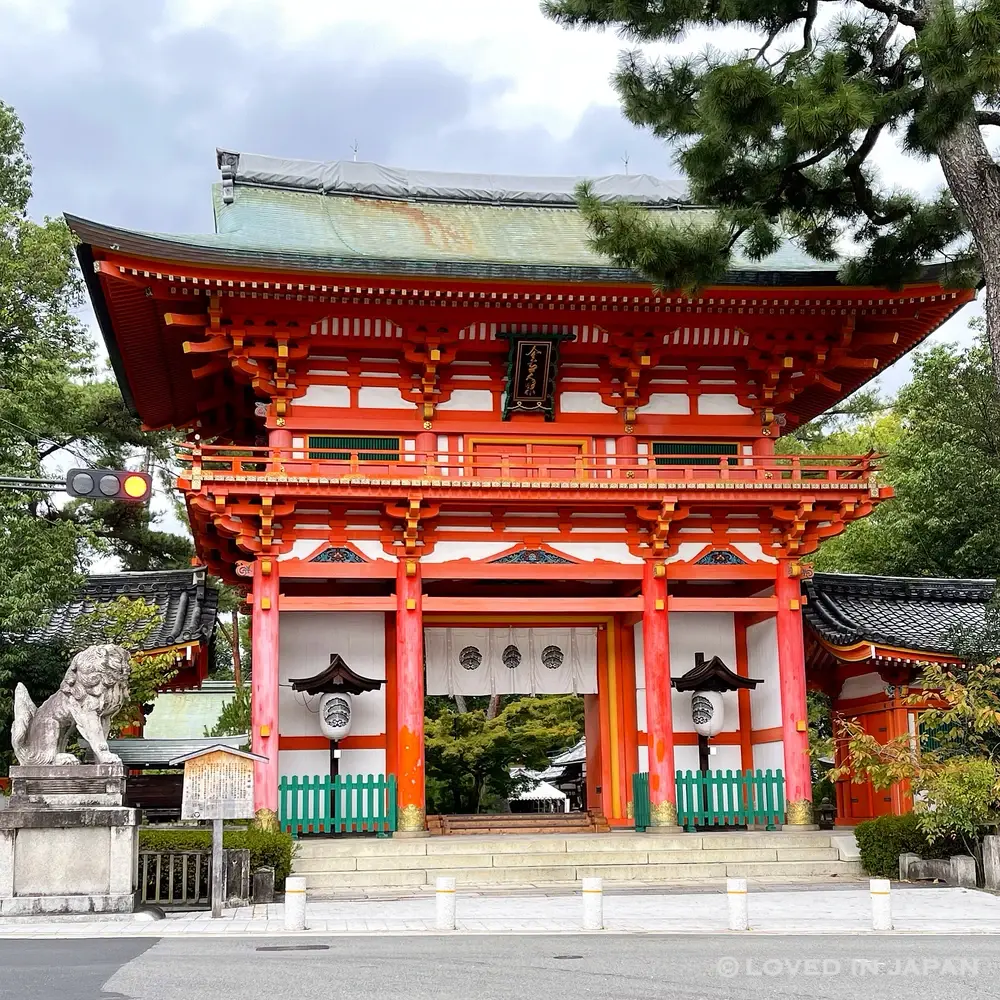
One of the pleasures of visiting Kyoto’s shrines and temples is discovering the food traditions that have grown around them. When you experience a historic place together with something people have eaten there for generations, the city’s past feels much more tangible.
If you visit Imamiya Shrine in northern Kyoto, one sweet is especially worth trying: aburi mochi, small skewered pieces of mochi grilled over charcoal just outside the shrine’s east gate.
Two specialist aburi mochi shops face each other across the old stone-paved approach. On the north side is Ichimonjiya Wasuke, better known as Ichiwa. Founded in 1000, it has been serving aburi mochi beside Imamiya Shrine for more than a millennium.
Imamiya Shrine Began with Prayers Against Epidemics
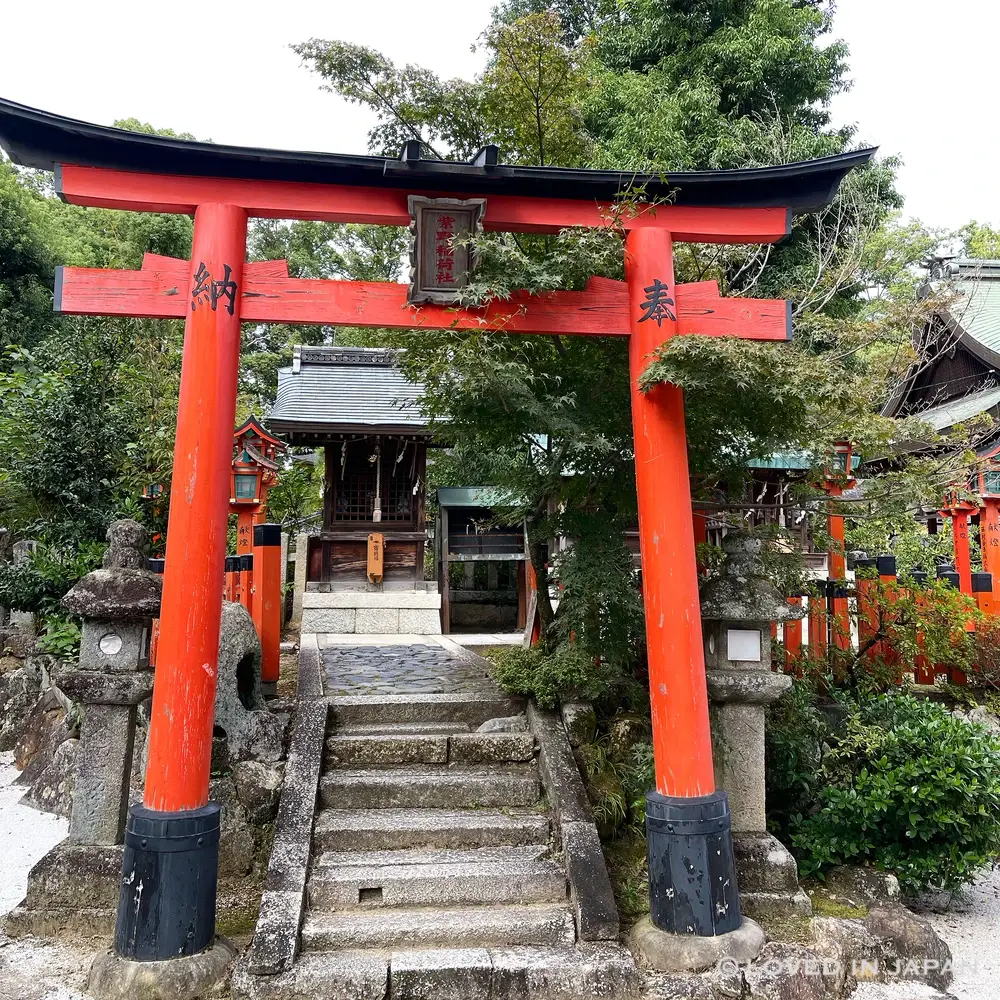
Imamiya Shrine’s history reaches back to a time when epidemics were a major threat to life in Kyoto.
Its origins are linked to a ceremony held in 994 to quell an epidemic in the capital. Today, visitors still come to the shrine to pray for health, longevity, good fortune, and favorable relationships.
The shrine is also closely associated with Keishoin, the mother of Tokugawa Tsunayoshi, the fifth shogun of the Tokugawa shogunate.
Born with the childhood name Otama, Keishoin later became the mother of a shogun and played an important role in supporting Imamiya Shrine. This connection is one reason the shrine is associated today with good matches and upward turns in fortune, often expressed through the familiar Japanese phrase tama-no-koshi.
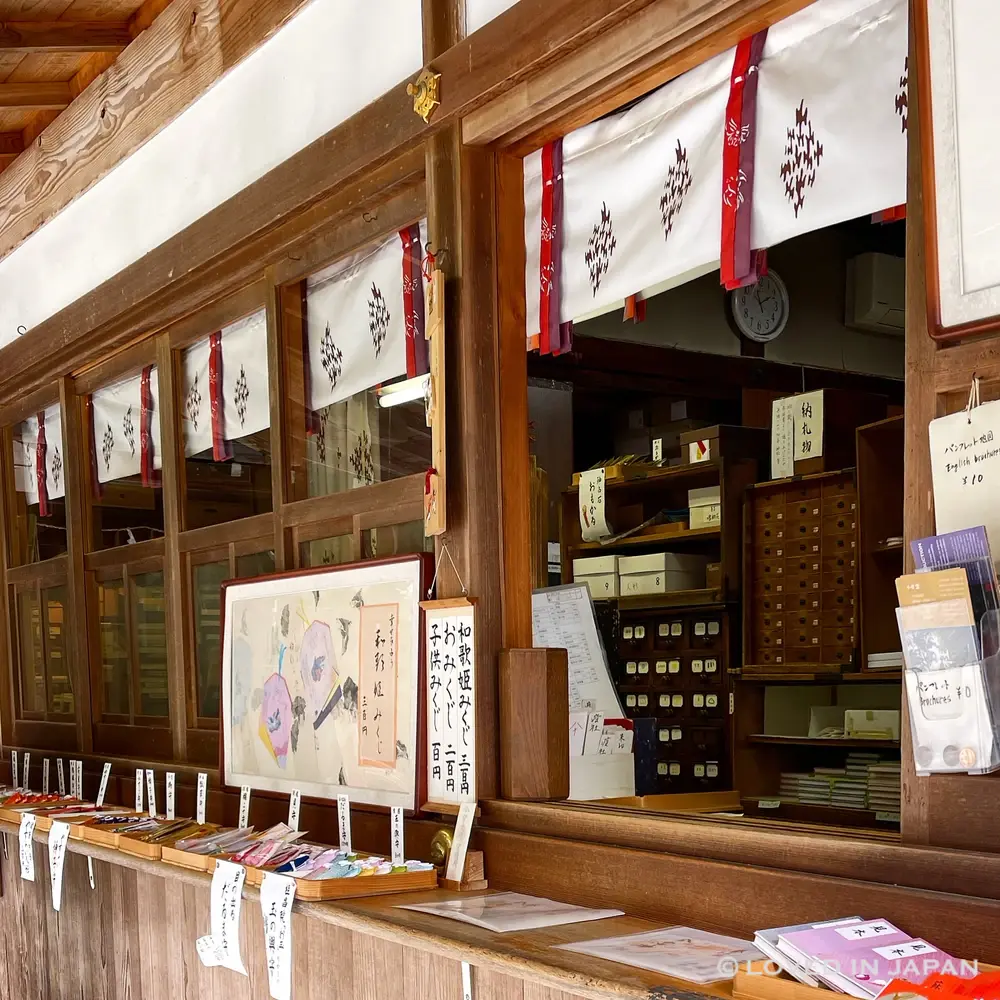
But the experience of visiting Imamiya Shrine does not end inside the shrine grounds.
Walk out through the east gate after your visit and you are met by the aroma of mochi toasting over charcoal. This is where one of the shrine’s best-known gate-side food traditions begins.
Two Aburi Mochi Shops Face Each Other Outside the East Gate
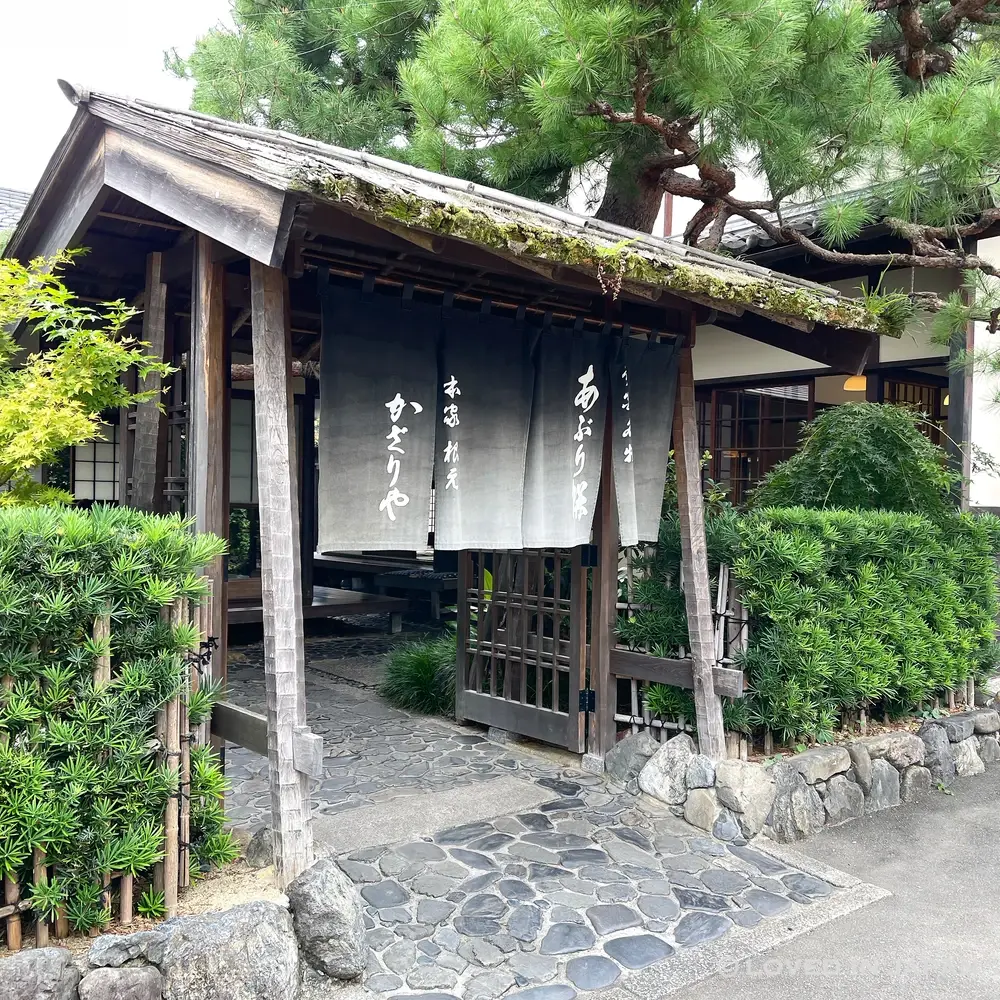
Immediately outside Imamiya Shrine’s east gate, two traditional tea shops stand opposite each other across the stone-paved approach.
Ichiwa, formally Ichimonjiya Wasuke, is on the north side. Kazariya is on the south.
Both specialize in aburi mochi: small pieces of mochi threaded onto thin bamboo skewers, grilled over charcoal, and finished with a sweet white miso sauce.
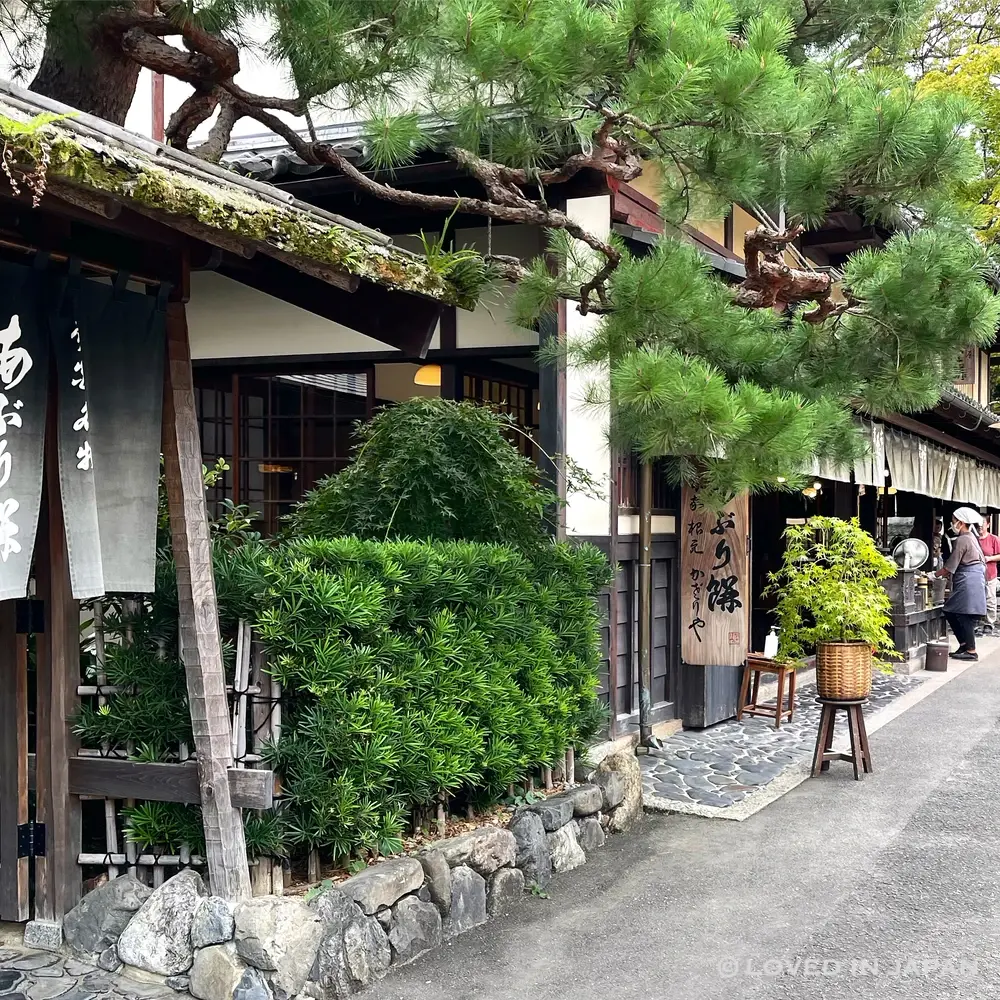
Ichiwa, the shop featured here, was founded in 1000. Across the path, Kazariya has also been serving aburi mochi for centuries.
Seeing the two shops facing one another, with mochi being grilled on both sides of the approach, is part of what makes this corner of Kyoto so memorable.
Ichiwa Has Been Serving Shrine Visitors for More Than 1,000 Years
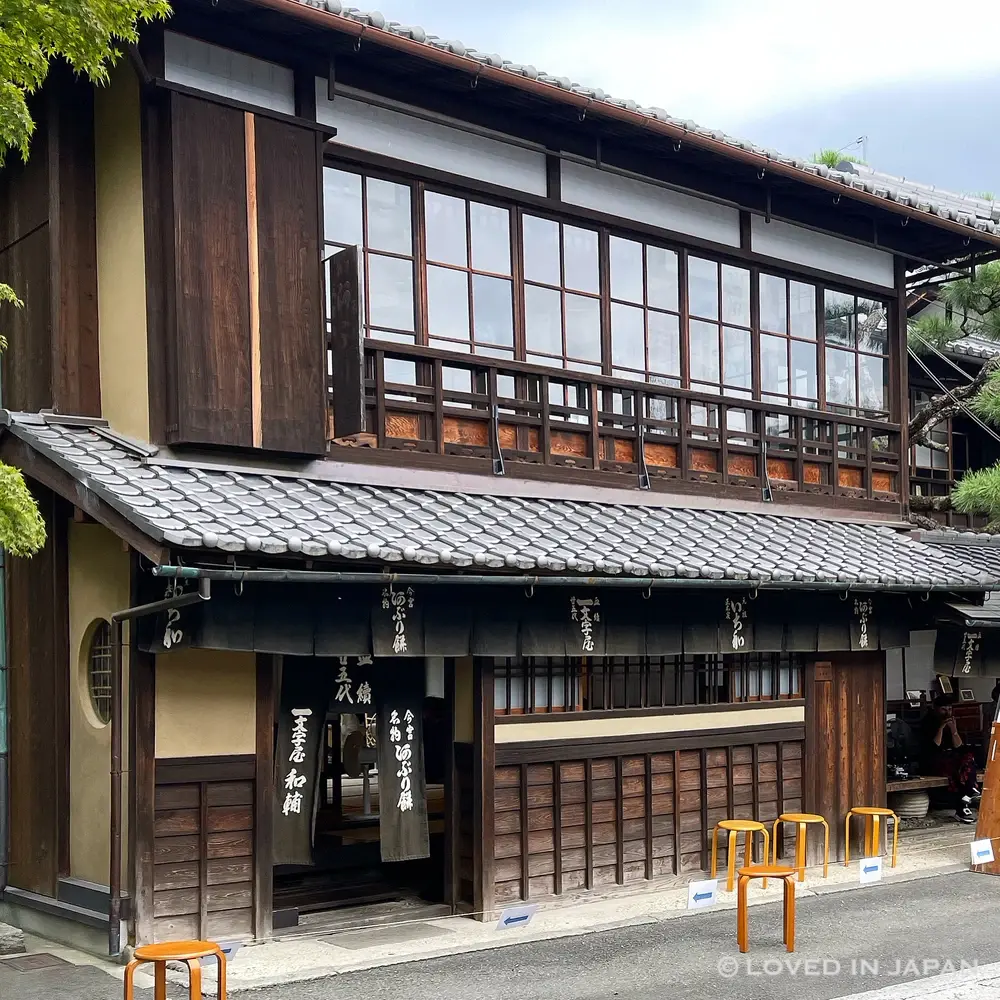
The appeal of Ichiwa goes beyond the sweets themselves.
Parts of the present shop building are said to be around 400 years old, and the property has been designated an Important Landscape Building by the City of Kyoto for its role in preserving the historic character of the approach to Imamiya Shrine.
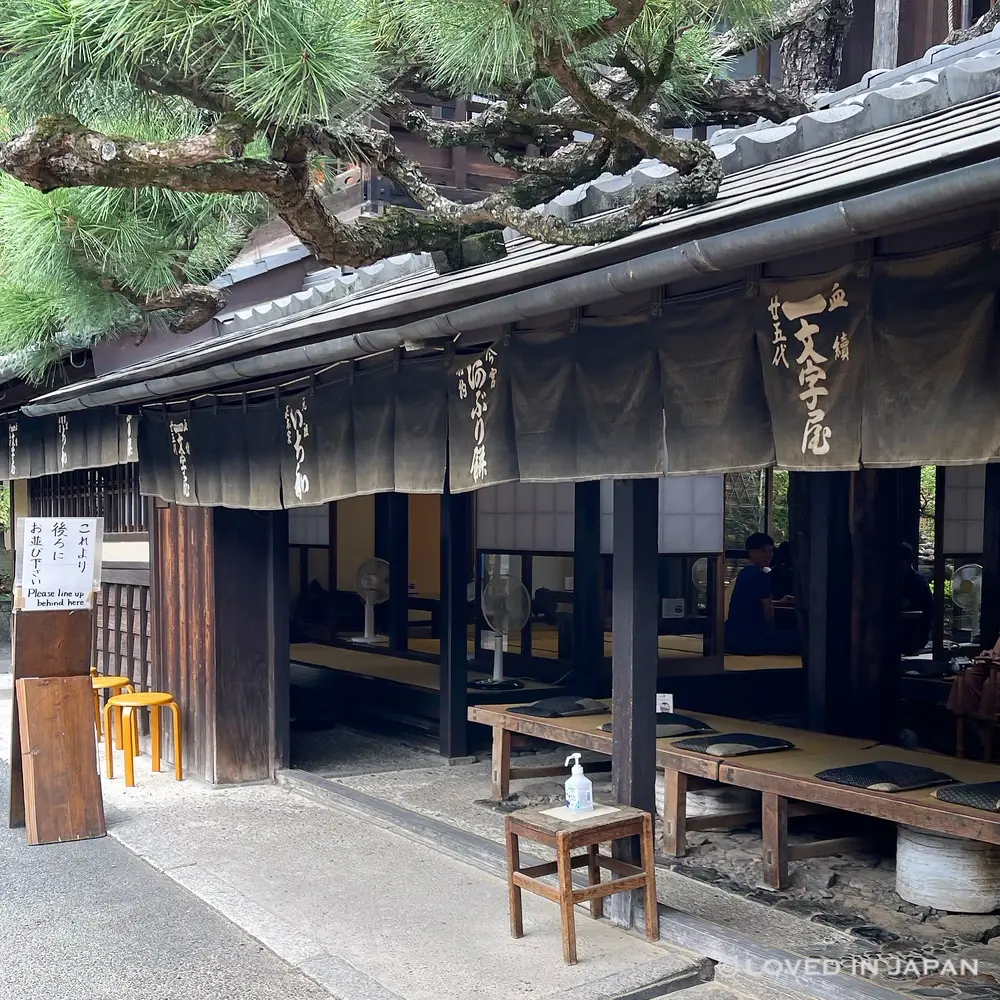
Step through the wide-open frontage and sit down inside the old tea shop, and the atmosphere feels very different from that of a modern city cafe.
Some seats look onto a small garden at the back, making the building itself part of the experience.
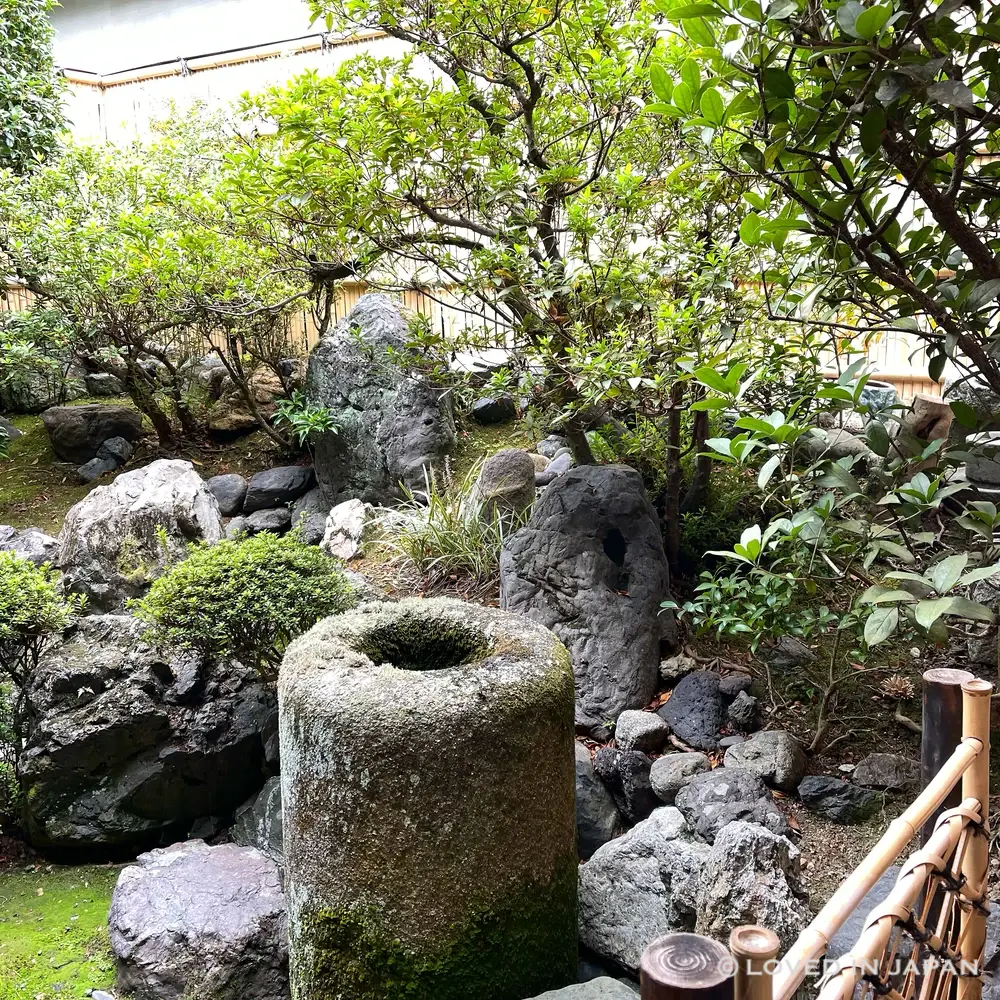
A history of more than a thousand years can sound abstract when you read it on a page. At Ichiwa, that history is still functioning as an everyday shop: mochi is grilled in front of you, customers sit down to eat, and the same local food tradition remains part of a visit to the shrine.
That continuity is what makes a stop here so interesting.
Charred Mochi, Sweet White Miso, and the Aroma of Charcoal
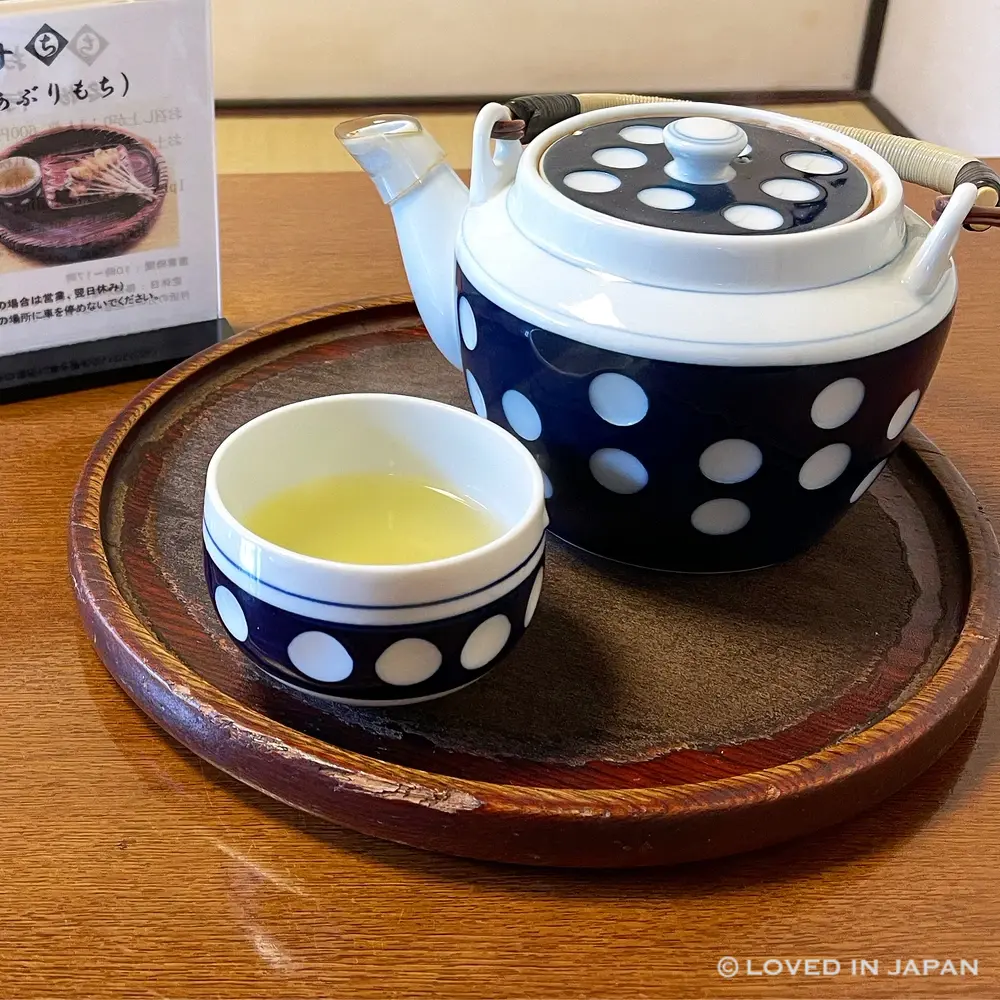
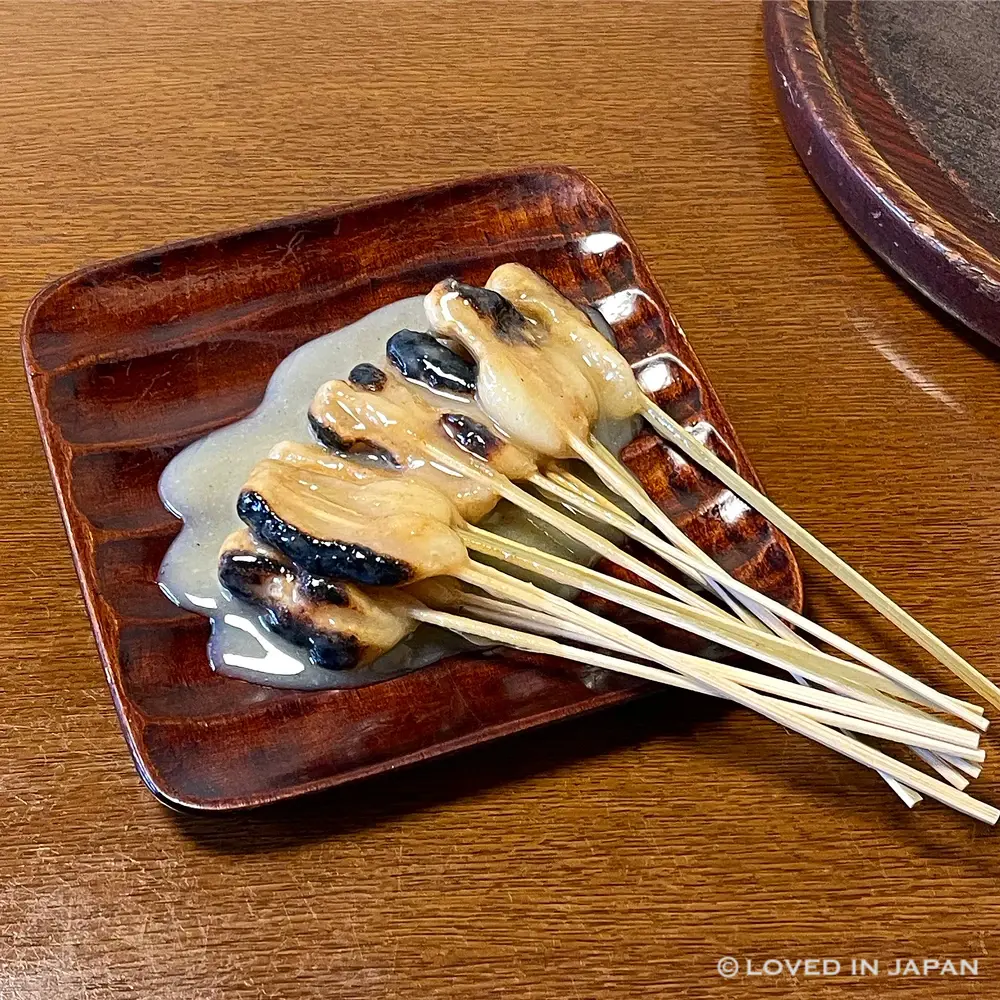
Ichiwa’s aburi mochi is made by placing small pieces of mochi on bamboo skewers, coating them with kinako (roasted soybean flour), grilling them over charcoal, and finishing them with a sauce made from white miso.
A serving currently costs 600 yen.
Each individual piece is small, and several skewers arrive together on one plate.
The first thing you notice is the toasted aroma from the charcoal-grilled surface.
Small charred patches bring out the fragrance of grilled mochi, followed by the mellow sweetness of the white miso sauce.
If you associate miso mainly with savory soup, the use of white miso in a sweet sauce may come as a surprise. Here, its gentle sweetness is balanced by a faint saltiness and the fermented depth of soybean, which works particularly well with the smoky, toasted flavor of the mochi.
Because each piece is small, the skewers are easy to eat one by one even though a serving looks generous on the plate.
There is nothing elaborate about the combination.
Mochi, charcoal, kinako, and white miso.
That simplicity is exactly what makes the contrast between the toasted mochi and the sweet miso sauce so easy to appreciate.
For Your First Visit, Eat It Freshly Grilled at the Shop
Aburi mochi is also available for takeaway.
But if this is your first time trying it, we recommend sitting down and eating it while it is freshly grilled.
Straight from the charcoal, the mochi is still soft and the toasted aroma on the surface is at its most noticeable.
This is not the kind of Kyoto souvenir designed to stay fresh for weeks. Its appeal lies in eating it in Kyoto, on the day it is made, in the place where the tradition continues.
Takeaway is available, but aburi mochi is best treated as a fresh sweet to enjoy the same day.
Experience Imamiya Shrine and Aburi Mochi Together
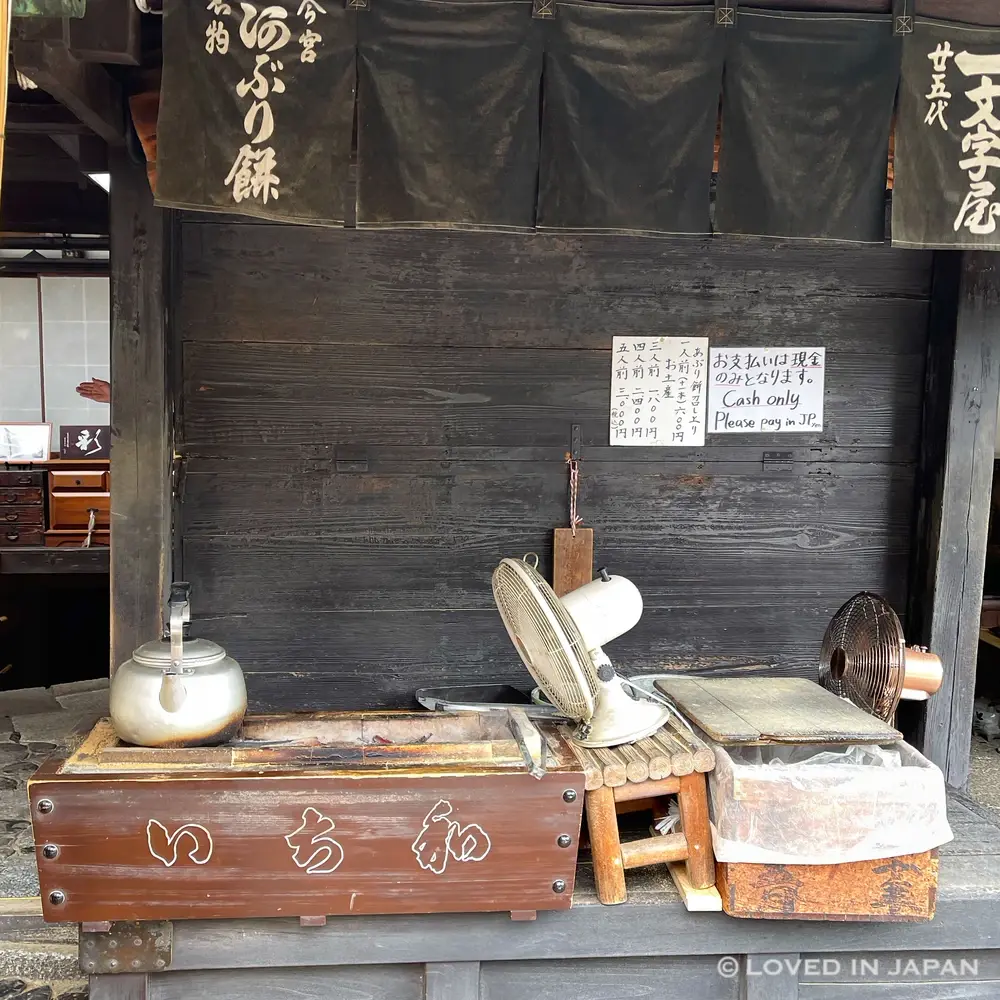
Ichiwa is worth visiting even if aburi mochi is your only reason for coming to this part of Kyoto. For a first visit, though, we recommend experiencing it together with Imamiya Shrine.
Walk through the shrine grounds first and learn how the site grew from traditions of praying for protection from epidemics, as well as its connection with Keishoin.
Then leave through the east gate and, almost immediately, you will see a tea shop founded more than a thousand years ago still grilling mochi over charcoal.
Rather than treating the shrine and its sweets as two separate sightseeing stops, the appeal is in experiencing them as parts of the same place and a culture that has continued there for generations.
Ichiwa is open from 10:00am to 5:00pm and is normally closed on Wednesdays. If the 1st, 15th, or a public holiday falls on a Wednesday, the shop opens that day and closes the following day instead. It also closes for a period around the end of the year.
If you want to step beyond central Kyoto and taste a traditional sweet in the setting where it has long been served, pair a visit to Imamiya Shrine with aburi mochi at Ichiwa.
About Ichiwa (Ichimonjiya Wasuke)
| Address | 69 Murasakino Imamiyacho, Kita Ward, Kyoto |
|---|---|
| Access | Open in Google Maps |
| Dine-in Option | Yes |
| Phone | 075-492-6852 |
| Hours | 10:00am–5:00pm Closed Wed; if the 1st, 15th, or a public holiday falls on Wed, closed the following day instead Closed at year-end |
| Website | none |