Ohagi in Tokyo: Creative Japanese Sweets at Takeno to Ohagi
Ohagi is a traditional Japanese sweet made from cooked glutinous rice shaped into a mound and covered with sweet bean paste or kinako, roasted soybean flour.
Takeno to Ohagi in Tokyo keeps that basic form while pairing ohagi with ingredients such as fruit, nuts, and matcha, and even shaping the bean paste into flower-like designs. The shop is especially known for this more creative approach to a familiar Japanese sweet.
The flavors change from day to day, so part of the appeal is discovering a different combination each time you visit.
Reworking Traditional Ohagi Through Flavor and Design
Traditional ohagi is usually made by lightly shaping cooked glutinous rice without pounding it completely, then wrapping it in chunky or smooth sweet bean paste, or coating it with kinako.
At Takeno to Ohagi, classics such as tsubuan and koshian appear alongside more inventive varieties made with ingredients chosen for the day. Some of the most striking pieces are decorated with thin layers of smooth bean paste arranged like flower petals. Built up three-dimensionally over the round ohagi, the delicate forms can resemble jo-namagashi, the refined fresh wagashi often shaped to express flowers and the seasons.
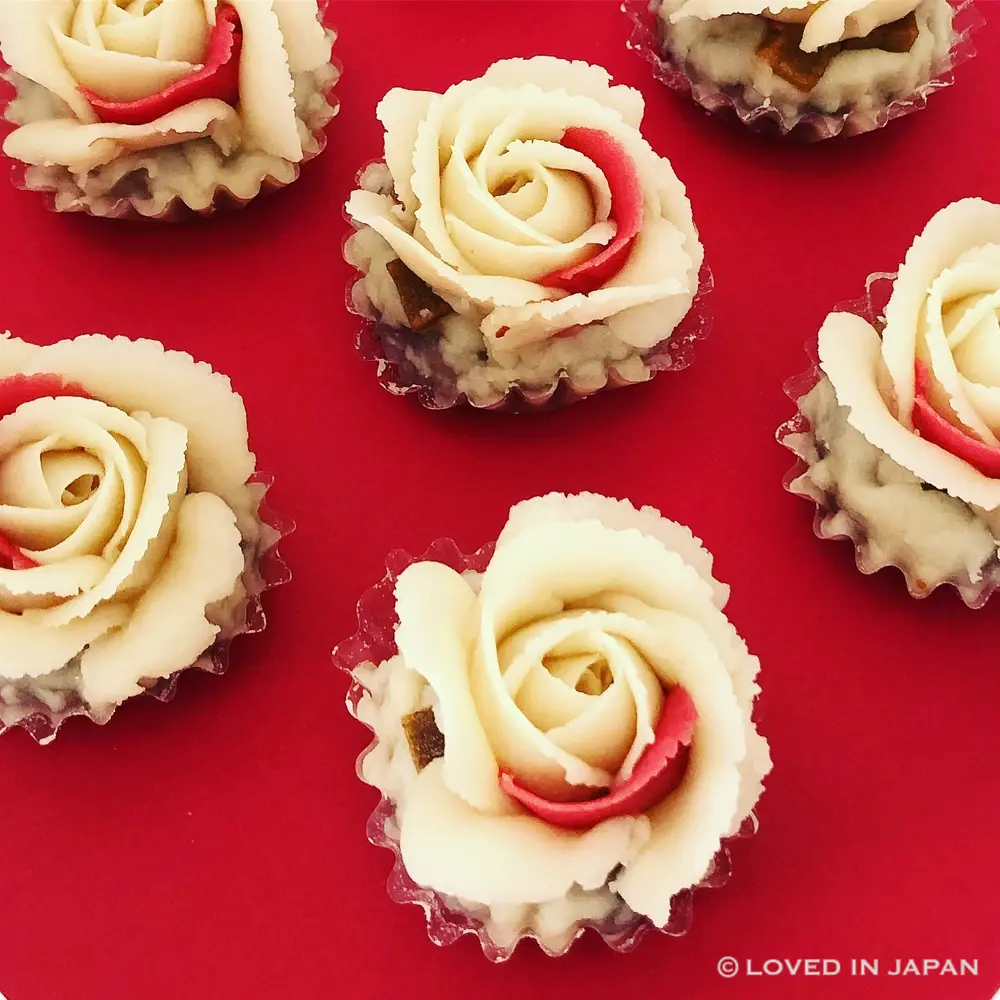
But the appeal is not only visual. When we tried them, combinations of bean paste, glutinous rice, fruit, matcha, shiso, and nuts gave each ohagi a different aroma and texture.
Seven Ohagi We Tried
Takeno to Ohagi changes its menu daily. The seven varieties below were available when we visited in the past, so the same flavors may not be on sale today. Rather than expecting a specific item, it is best to see what is in the case when you arrive.
Tsubuan
The tsubuan we tried was a simple ohagi made with Hokkaido Dainagon azuki bean paste wrapped around white glutinous rice.
The paste was fine-textured, while small pieces of azuki skin created subtle changes in each bite. Along with the sweetness came a clear bean aroma, making the flavor of the azuki itself easy to notice.
Koshian
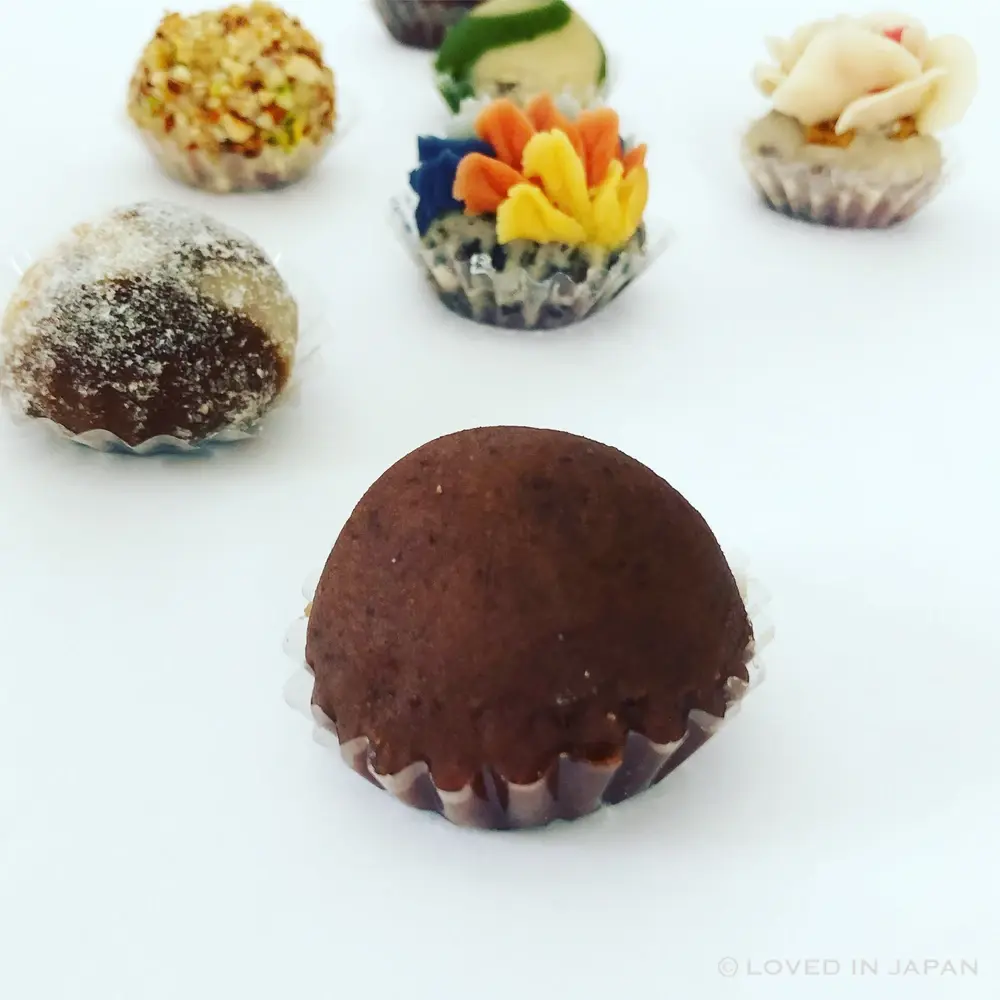
The koshian we tried was also made with Hokkaido Dainagon azuki beans.
The smooth, skinless bean paste was paired with glutinous rice that still held noticeable moisture. The rice separated cleanly as we bit into it, while the fine paste spread evenly across the mouth, letting us enjoy the contrast between the two textures at the same time.
Yomogi and Matcha
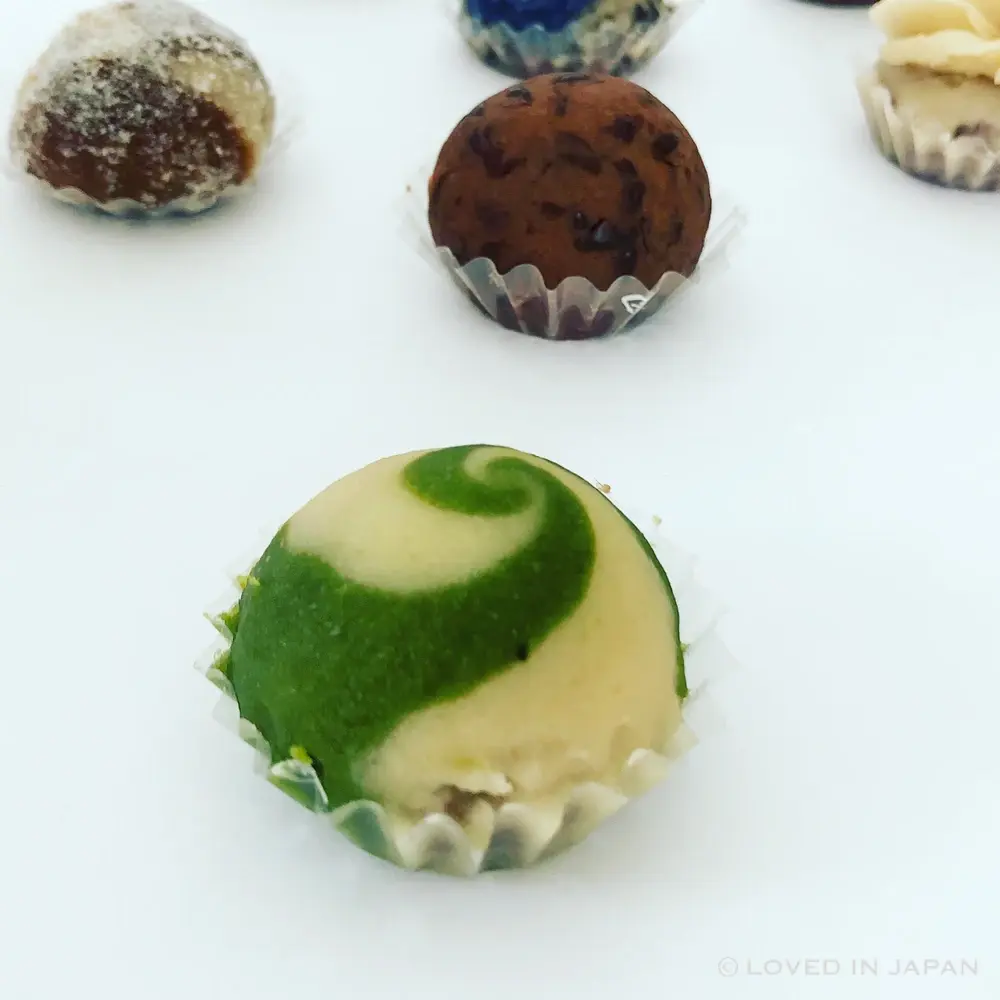
Yomogi and Matcha layered the flavor of matcha over smooth sweet bean paste.
The aroma of matcha kept the sweetness of the bean paste from dominating the bite, and the two flavors gradually blended together in the mouth. It used familiar wagashi ingredients in a combination that felt quite different from a standard ohagi.
Hitohira
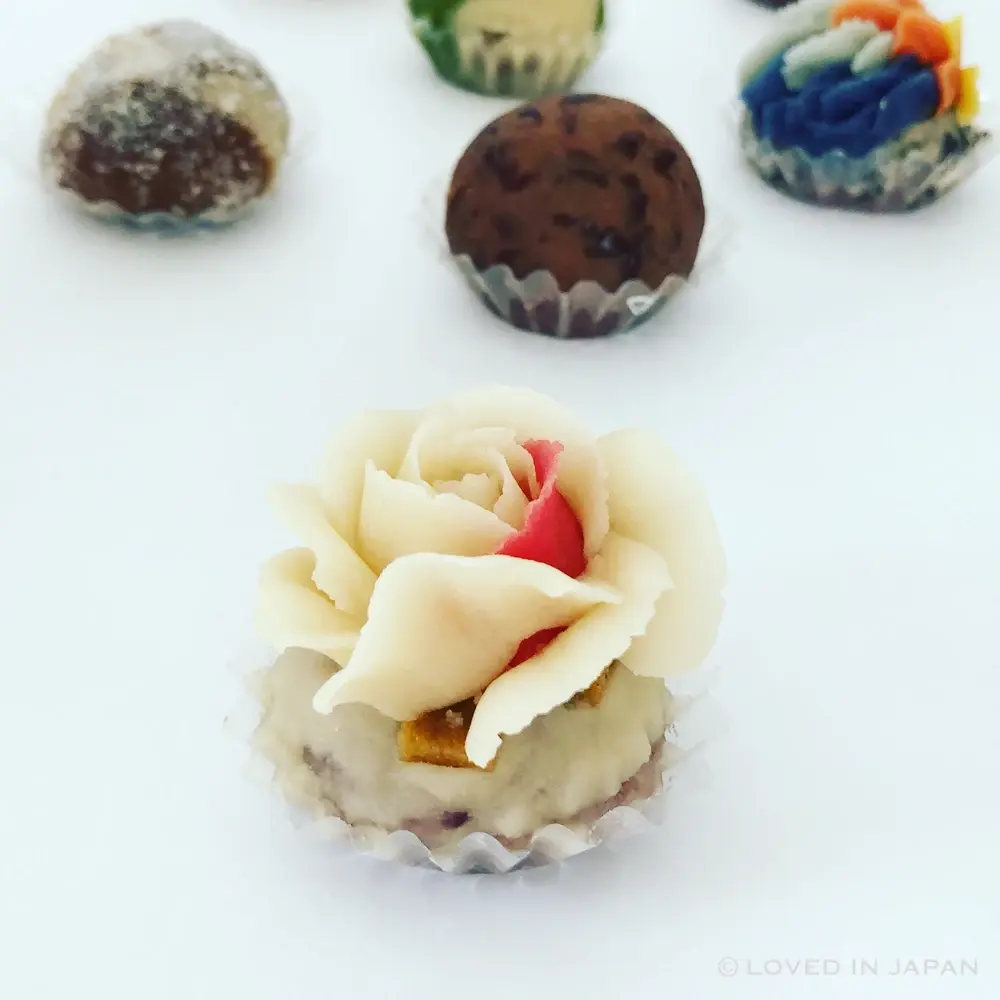
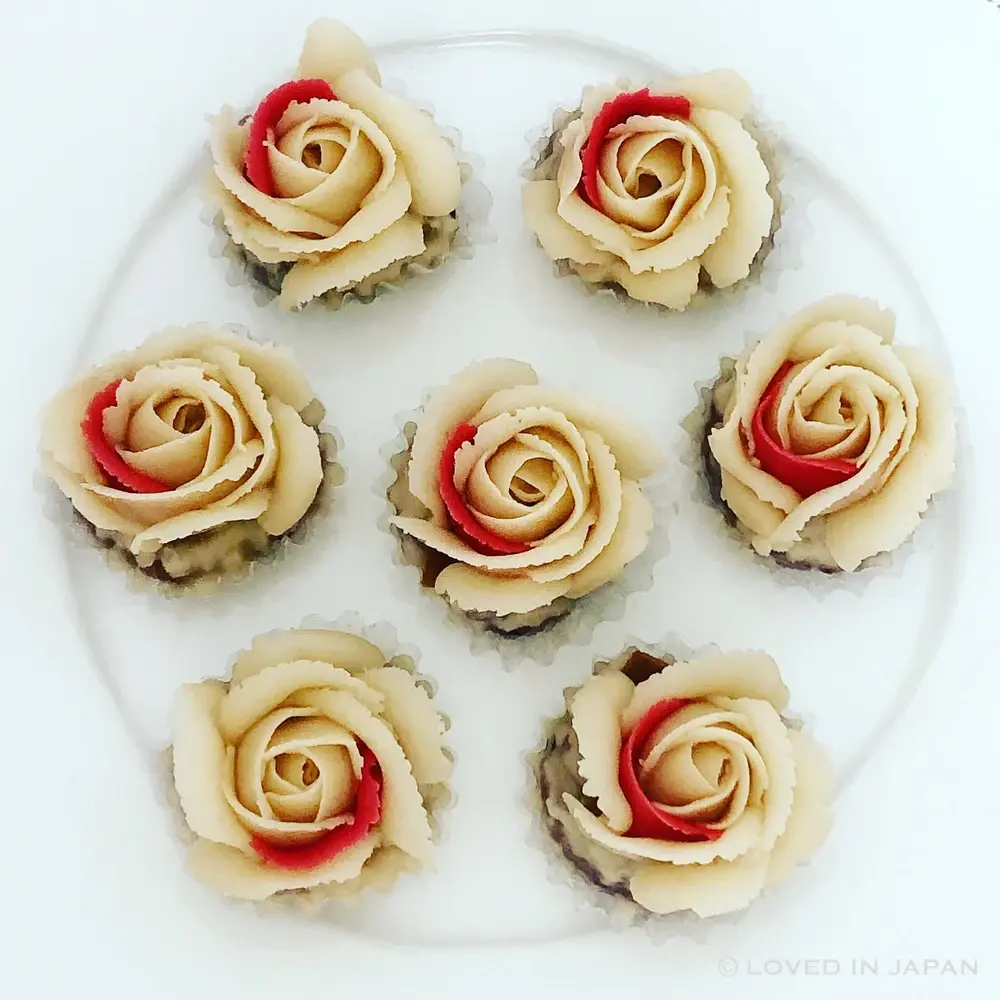
Hitohira was made by shaping smooth bean paste into individual petals and arranging them into a form that resembled a rose.
Peach purée was mixed into the bean paste, adding a peach aroma to its sweetness. Dried hawthorn was also used beneath the petals, bringing in another layer of fruit flavor that would not come from the bean paste alone.
Banka no Yugure
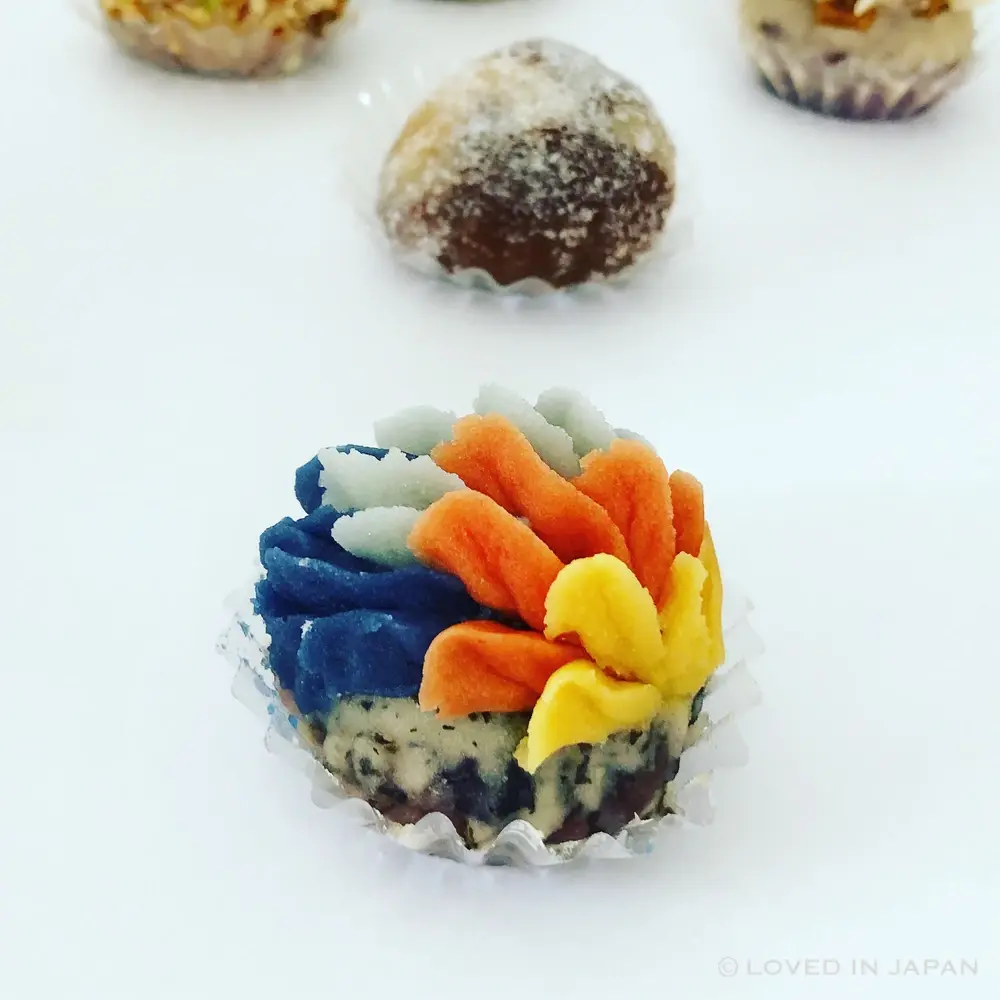
Banka no Yugure combined ohagi mixed with red shiso and fresh blueberries.
The sweetness of the bean paste was followed by the aroma of shiso, then by the acidity of the blueberries. Sweetness, an herbal note, and fresh fruit acidity shifted within a single bite, making this one of the more clearly contrasted combinations we tried.
Orange Chocolat
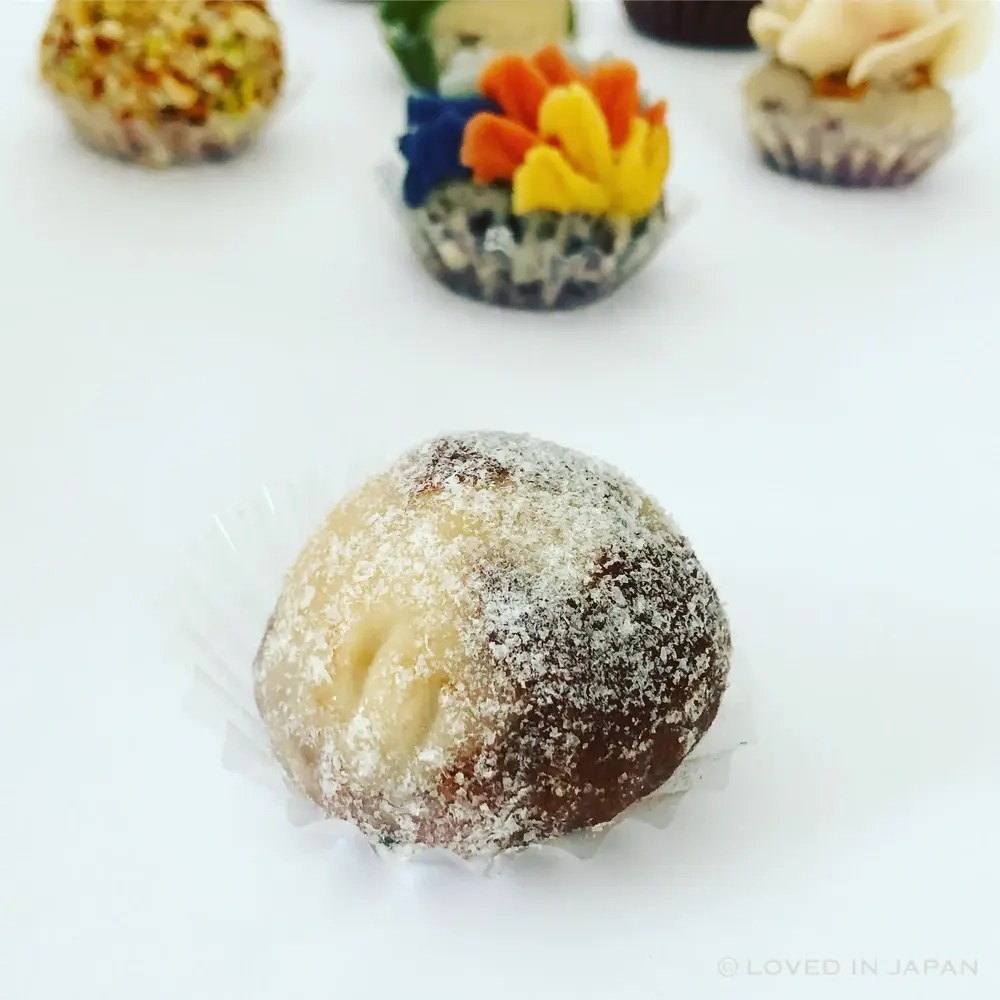
Orange Chocolat paired orange with chocolate.
The combination recalled an orangette, where citrus and chocolate are paired together, but here those flavors were built around glutinous rice and sweet bean paste. It showed how ingredients more commonly associated with Western-style sweets can also work within the structure of ohagi.
Nuts
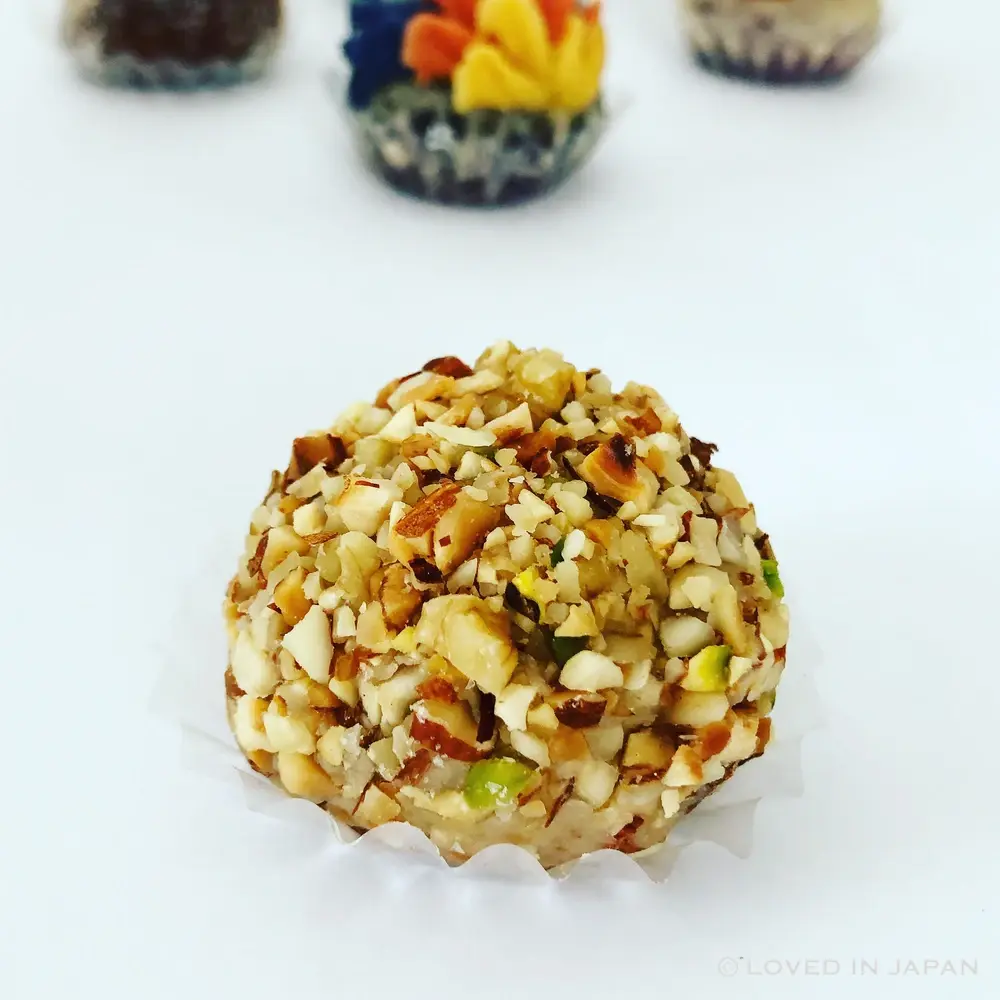
The Nuts variety we tried used four kinds of organic nuts: almonds, hazelnuts, walnuts, and pistachios.
The aroma of the finely crushed nuts spread through the mouth, making the flavor feel more layered than bean paste alone. Their small pieces also changed the bite against the soft glutinous rice and bean paste, adding a noticeable textural contrast as we chewed.
Packed in a Wappa Box and Best Enjoyed the Same Day
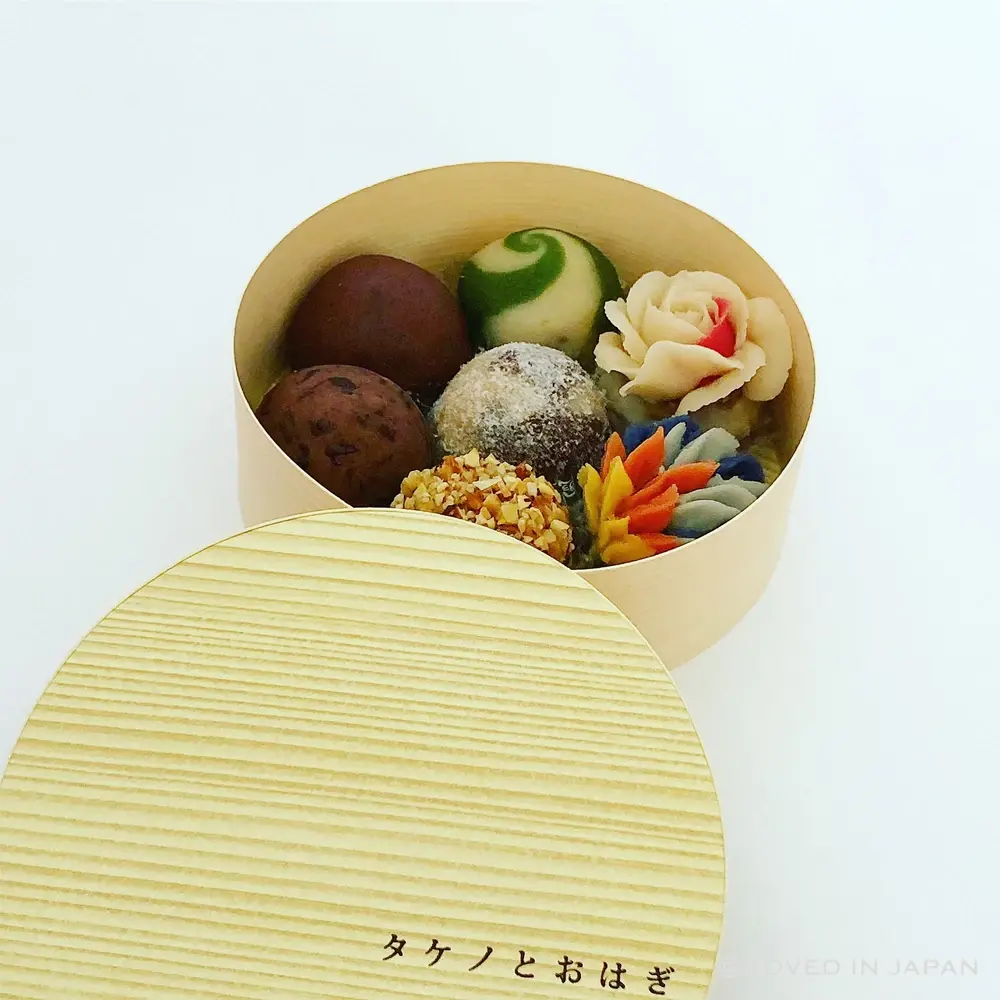
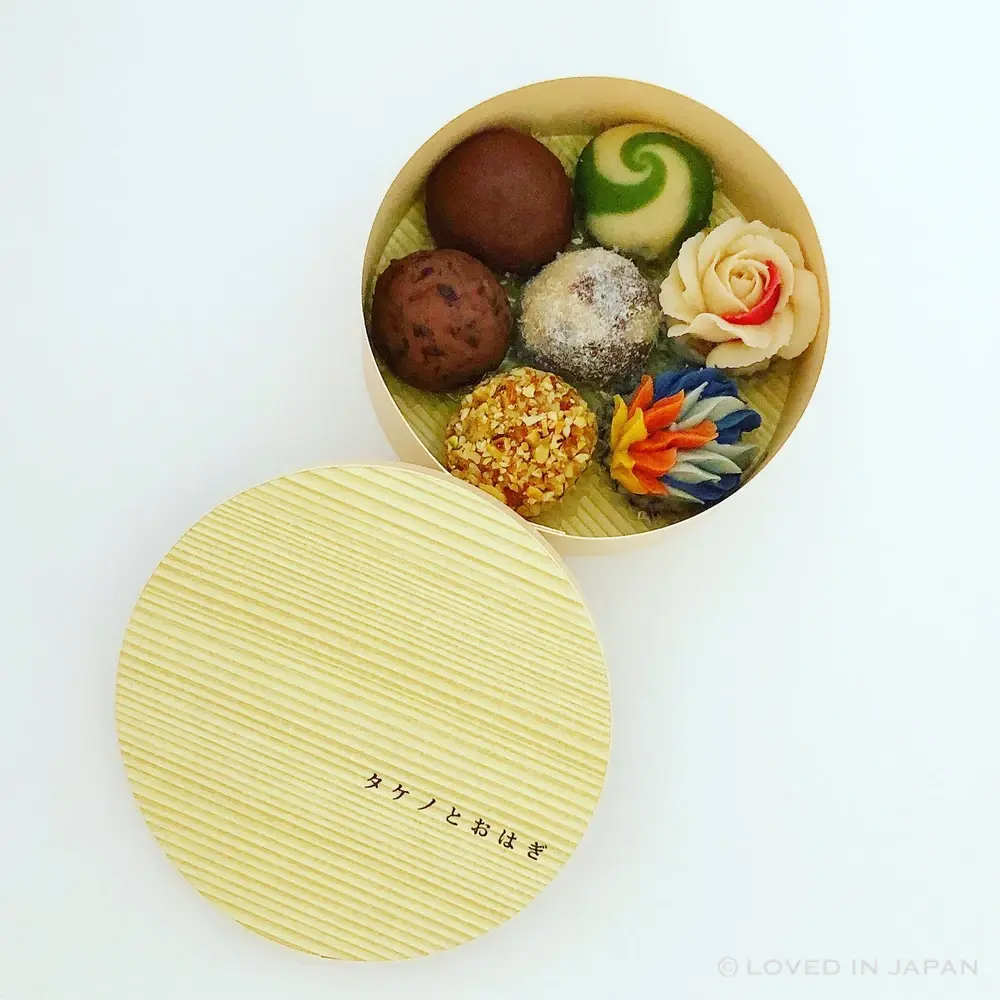
Another appealing detail at Takeno to Ohagi is the option to have several pieces arranged together in a wooden wappa box. When ohagi of different colors and shapes sit side by side in the round container, the differences in their designs become even easier to appreciate.
Ohagi is a fresh sweet rather than a long-lasting boxed souvenir, and it is best enjoyed on the day of purchase. Instead of carrying it overseas, plan to eat it while you are still in Tokyo—at your hotel, accommodation, or another suitable place soon after buying it.
Visit the Setagaya or Omotesando Shop
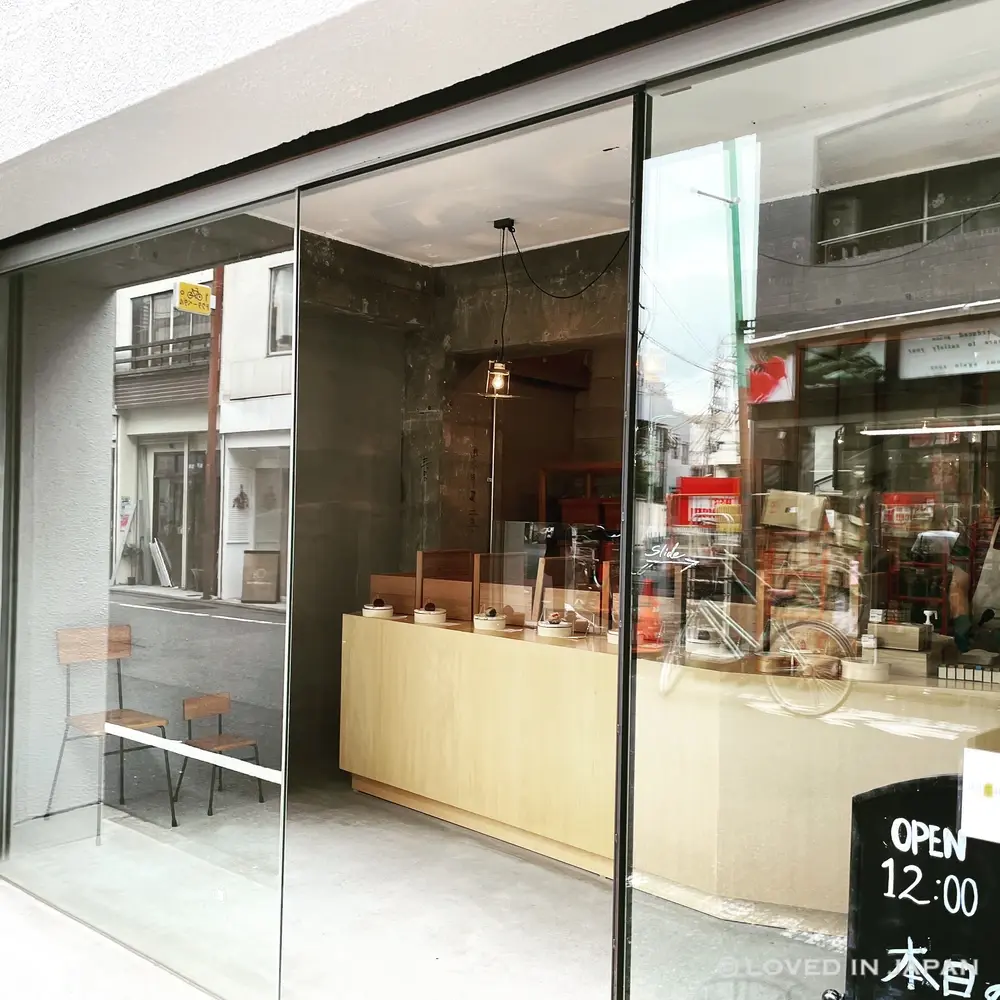
Takeno to Ohagi currently has shops in Setagaya and Omotesando. If you want to make sure your order is ready, you can reserve the daily ohagi set through the official website. Reserved orders can be picked up only at the Setagaya Main Shop, not at Omotesando. Reservations open at 9:00 a.m. one month before the desired pickup date.
Because the flavors in the display change from day to day, it is better to visit ready to choose from that day’s selection rather than going only for one specific flavor. The latest lineup is posted on the official Instagram account, so it is worth checking before you go.
Takeno to Ohagi Setagaya Main Shop
| Address | 3-5-6 Yoga, Setagaya City, Tokyo, Arni Publishing Building 1F |
|---|---|
| Access | Open in Google Maps |
| Dine-in Option | Yes |
| Phone | 03-6805-6075 |
| Hours | 12:00–18:00, Wednesday–Sunday |
| Website | Official website |
Takeno to Ohagi Omotesando Shop
| Address | 4-14-20 Jingumae, Shibuya City, Tokyo, Tiara Building 1F |
|---|---|
| Access | Open in Google Maps |
| Dine-in Option | No |
| Hours | 12:00–18:00, Wednesday–Sunday |
| Website | Official Instagram |